White
Finding the Right 4-Seater Electric Golf Cart
If you’ve been researching electric golf carts recently, you’ve probably noticed just how many options are out there now. It can feel overwhelming — especially when three or four models look similar on paper but differ quite a bit once you dig deeper.
We recently spent time comparing three of the most talked-about 4-seater electric golf carts available in Canada: the Denago EV Rover XL, the EVolution D5 Maverick, and the Advanced EV Horizon. Whether you’re looking at a cart for your cottage, a resort fleet, or just getting around your community, this comparison should help you figure out which one actually fits your life — not just your driveway.
No sales pitch here. Just an honest look at the specs, features, and real-world considerations that matter.
Getting to Know the Three Models
Each of these carts takes a different approach to what a modern golf cart should be, and that’s actually a good thing. It means there’s probably one that fits your priorities better than the others.
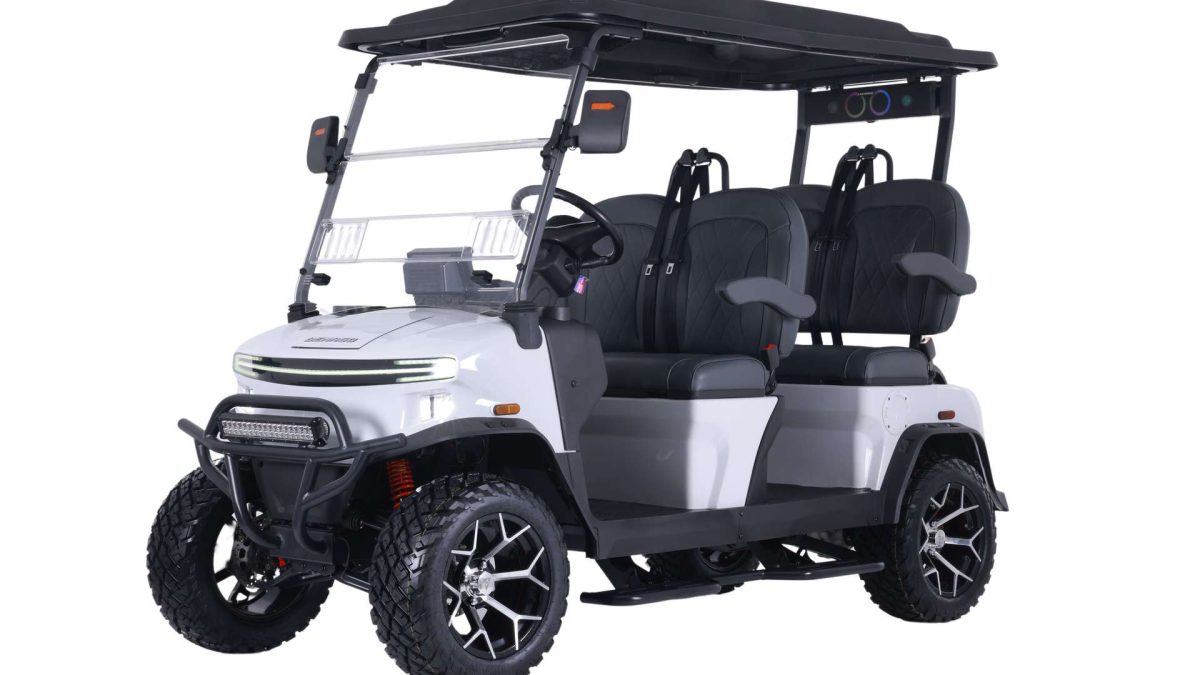
The Denago Rover XL leans heavily into tech and build quality. It’s the one with Apple CarPlay and Android Auto built right in, and the chassis is aluminum rather than steel — a detail that matters more than you might think (more on that in a minute). The EVolution D5 Maverick puts emphasis on aesthetics and power, with colour-matched components that give it a cohesive, polished look. And the Advanced EV Horizon is the most compact of the three, with a clever wireless phone charging feature that the other two don’t offer.
All three are competitively priced in the Canadian market. For current pricing, your best bet is to contact an authorized dealer directly — prices can fluctuate and often include regional incentives.
Build Quality: Why the Chassis Material Actually Matters
This might sound like a minor detail, but the material your cart is built from has a real impact on how long it lasts — especially in Canada.
The Denago Rover XL uses an aluminum chassis, while both the EVolution D5 Maverick and Advanced EV Horizon are built on steel frames. On the surface, steel feels solid and proven. But if you live anywhere near the coast, deal with winter road salt, or store your cart in a space that isn’t climate-controlled, aluminum has a significant edge. It doesn’t rust. Period. Steel, on the other hand, needs ongoing attention to prevent corrosion — something a lot of buyers don’t think about until it’s already a problem.
For a vehicle that might sit in a garage for four or five months during a Canadian winter, corrosion resistance isn’t a “nice to have.” It’s a practical necessity.
Technology and Connectivity
This is where the three models diverge the most.
The Denago Rover XL comes with Apple CarPlay and Android Auto built in, which is genuinely unusual for a golf cart. You can pull up your music, follow GPS directions, or take a hands-free call just like you would in your car. It also uses a Tesla-style NFC key card instead of a traditional ignition key — no fumbling for keys, and no risk of losing a bulky fob somewhere on the back nine. Even the charging port follows a Tesla-style design.
The EVolution D5 Maverick and the Advanced EV Horizon both use traditional keys and standard charging ports. Neither offers smartphone integration. That’s not necessarily a dealbreaker — plenty of people just want to hop in and drive — but if staying connected while you ride is important to you, the Rover XL is currently the only option in this group that delivers on that front.
Safety: What Comes Standard
All three carts include backup cameras as standard equipment, which is great to see. Where they differ is in the windshield.
Both the Denago Rover XL and the EVolution D5 Maverick come with vented DOT windshields. That venting design helps with airflow and — just as importantly — reduces fogging. If you’ve ever tried driving a golf cart at 7 AM near a lake, you know exactly why that matters. The Advanced EV Horizon comes with a basic windshield that doesn’t include the vented feature.
Comfort and the Little Things
Sometimes it’s the small details that make the biggest difference in daily use.
Sound systems: Both the Denago Rover XL and the EVolution D5 Maverick include a rear sound bar, so your passengers aren’t straining to hear music over road noise. The Advanced EV Horizon doesn’t include one — you’d need to add aftermarket speakers if that’s important to you.
Seating is a bit of a personal preference call. The Denago offers premium seats designed for longer rides. The EVolution D5 goes for colour-matched seats that complement the cart’s overall look. The Advanced EV Horizon keeps things straightforward with standard seating.
Floor mats might seem trivial, but anyone who’s dealt with mud, gravel, or wet shoes knows better. The Denago Rover XL includes a premium floor mat; the other two don’t, so factor in the cost of buying one separately.
And then there’s phone charging. The Denago and EVolution both offer USB charging ports. The Advanced EV Horizon takes a different approach with a wireless phone charger — just set your phone down and it charges. It’s a small but genuinely convenient feature, and neither of the other two carts offers it.
Under the Hood: Technical Specs That Actually Matter
Let’s talk numbers — but only the ones that make a real difference in how these carts perform day to day.
Motor Power
The EVolution D5 Maverick has the strongest continuous motor output at 6.3 kW. The Denago Rover XL runs a 5 kW continuous motor that peaks at 6.3 kW — so it matches the EVolution when you need that burst of power on a hill or steep incline. The Advanced EV Horizon comes in at 5 kW.
In practice, all three have more than enough power for typical community driving, resort paths, and golf course terrain. You’ll really only notice the difference on steep grades or when carrying a full load of passengers plus cargo.
Battery Capacity and Range
This is a big one. Battery capacity directly determines how far you can go on a single charge — and nothing kills the fun of owning an electric cart faster than range anxiety.
The Denago Rover XL leads with 5,376 Wh (51.2V × 105Ah). The EVolution D5 Maverick is close behind at 5,280 Wh (48V × 110Ah), and the Advanced EV Horizon comes in at 5,120 Wh (51.2V × 100Ah).
The differences are modest but real. Keep in mind that your actual range depends on terrain, passenger weight, tire pressure, and how aggressively you drive. Expect somewhere in the range of 40 to 60+ kilometres on a full charge across all three models.
Size and Dimensions
Size matters — not just for how the cart feels to drive, but for where you can store it and what paths you can navigate.
The Advanced EV Horizon is the most compact at 107.9 × 47.6 × 71.7 inches. If you have a tight garage or narrow property paths, this is your best bet.
The EVolution D5 Maverick is the widest at 118.1 × 55.8 × 83.1 inches. That wider stance gives it a planted feel on the road, but measure your garage door before you commit.
The Denago Rover XL sits in between at 118 × 49 × 81.5 inches — full-sized but not as wide as the EVolution.
All three use DOT-approved tires, though the Denago and EVolution both run larger 23×10-14 inch wheels while the Advanced EV uses smaller 205/65-10 wheels.
Buying a Golf Cart in Canada: A Few Things to Think About
If you’re shopping from the US market, some of this might be familiar. But buying in Canada comes with its own set of considerations that are worth understanding before you commit.
The Weather Factor
Let’s be honest — Canadian weather is hard on everything, and golf carts are no exception. That aluminum vs. steel chassis question we discussed earlier? It’s not academic. Salt, moisture, and freeze-thaw cycles are the enemies of steel components, and depending on where you live, your cart could be exposed to all three.
The good news is that all three models use lithium batteries, which handle cold weather significantly better than the old lead-acid batteries. They hold their charge longer in cool temperatures and don’t degrade as quickly. That said, if you’re in a region with serious winters, you’ll still want to plan for proper winter storage — a heated garage or at minimum a covered, dry space.
Road Legality: Check Before You Buy
This is one area where a lot of first-time buyers get surprised. Golf cart regulations in Canada are a patchwork — they vary by province, and often by individual municipality within provinces.
Some communities welcome low-speed vehicles on certain roads. Others restrict them entirely. You might need registration, insurance, specific safety equipment, or all of the above. The DOT-approved windshields and tires that come standard on the Denago and EVolution could make the registration process easier in jurisdictions that require them.
Our advice: call your local municipality and check with your provincial transport authority before you buy. It takes ten minutes and could save you a lot of frustration.
Dealer and Service Support
An often-overlooked factor: what happens after you buy? Consider whether there’s an authorized dealer near you who can provide parts, service, and honour the warranty. A great cart with no local support becomes a headache fast.
So, Which One Should You Choose?
After spending time with all three, here’s how we’d break it down:
The Denago Rover XL is the best choice if technology, build longevity, and a premium driving experience are your top priorities. The smartphone integration alone sets it apart from the other two, and the aluminum chassis gives it a durability advantage that compounds over years of ownership. It also has the largest battery capacity in this group — a nice bonus if range is a concern.
The EVolution D5 Maverick makes sense if you care about aesthetics and raw power. The colour-matched components give it a cohesive, showroom-ready look that the other two can’t quite match, and it offers the strongest sustained motor output. Just keep in mind the wider dimensions if space is tight.
The Advanced EV Horizon is the smart pick if you need something compact and practical. It’s the easiest to store and maneuver, and the wireless phone charger is a genuinely nice touch. It’s the most modest in terms of features and battery capacity, but for buyers who value simplicity and a smaller footprint, it delivers.
Before You Decide, Go See Them in Person
We can lay out specs and features all day, but nothing replaces the experience of actually sitting in these carts and taking them for a spin. The way the seat feels, how the steering responds, the sound (or lack of sound) of the motor — these are things you can’t get from a spec sheet.
Visit a local dealer and ask about warranty terms, parts availability in Canada, and any seasonal promotions. And don’t forget to confirm road legality in your area before you finalize anything.
Ready to get started? Reach out to an authorized Canadian dealer to get the latest pricing.
Frequently Asked Questions
Can I legally drive a golf cart on public roads in Canada?
This varies quite a bit depending on where you live. Some provinces and municipalities allow low-speed vehicles on certain public roads — usually with speed limits of 40 km/h or less — while others don’t permit them at all. You may also need specific safety equipment, registration, and insurance. The safest approach is to call your local municipal office and provincial transport authority before making any assumptions.
How long will the batteries last before I need to replace them?
All three models use lithium batteries, which are a major improvement over older lead-acid technology. With proper care — regular charging, avoiding deep discharge, and storing the cart correctly over winter — you can expect the battery pack to last roughly 5 to 10 years. In terms of range per charge, most owners report getting somewhere between 40 and 60+ kilometres depending on terrain, load, and driving habits.
Do I need to insure my golf cart?
If you plan to drive it on any public road, yes — insurance is almost always required. Even if you’re only using it on private property, it’s worth checking with your insurance provider. Some homeowner policies may cover on-property incidents, but a dedicated policy gives you much better protection.
What kind of maintenance do electric golf carts need?
One of the best things about going electric is how little maintenance is required compared to gas-powered carts. There’s no oil to change, no spark plugs to replace, and no fuel system to worry about. Your regular maintenance checklist is pretty short: check tire pressure, inspect the brakes, keep the battery connections clean, and make sure the cart is charged and stored properly when not in use.
Specifications and features mentioned in this article are based on information available at the time of writing. Please verify current details with an authorized dealer before making a purchase decision.