

What Makes a Great Neighborhood Electric Vehicle for Canadian Communities?
When shopping for a neighborhood electric vehicle (NEV) in Canada, understanding what sets apart a quality electric cart from a basic golf cart can save you thousands and ensure years of reliable community transportation. As Canadian communities increasingly embrace electric mobility solutions, the choice between different NEV models has become more critical than ever.
Understanding NEV Classifications in Canada
According to Transport Canada’s Low-Speed Vehicle regulations, NEVs fall into a specific category distinct from regular passenger vehicles. These electric vehicles are designed for use primarily within controlled access areas such as gated communities, private roads, and recreational facilities.
It’s important to understand that while some provinces like Ontario have pilot programs allowing limited road use, most NEVs in Canada are currently restricted to community areas, private property, and off-road applications. The Ontario LSV pilot program allows qualified vehicles on roads with speed limits up to 50 km/h, but this requires municipal approval and specific vehicle compliance.
Essential Features to Look For
When evaluating neighborhood electric vehicles, prioritize these critical components that separate premium models from basic alternatives:
**Battery Technology and Warranty**: The heart of any electric vehicle is its battery system. LiFePO4 (Lithium Iron Phosphate) batteries represent the gold standard for NEVs, offering superior longevity, safety, and performance compared to traditional lead-acid alternatives. Look for manufacturers offering comprehensive 5-year battery warranties, which demonstrates confidence in their technology.
**Frame Construction**: Aluminum frames provide significant advantages over steel in Canadian climates. The corrosion resistance is particularly valuable given our winter road salt exposure, even in community settings. Aluminum construction also reduces overall vehicle weight, improving efficiency and extending battery life.
**Safety Systems**: Modern NEVs should include four-wheel hydraulic disc brakes, LED lighting systems for better visibility, and backup cameras for enhanced safety during parking and maneuvering. Seat belts and proper occupant restraints are non-negotiable features for family use.
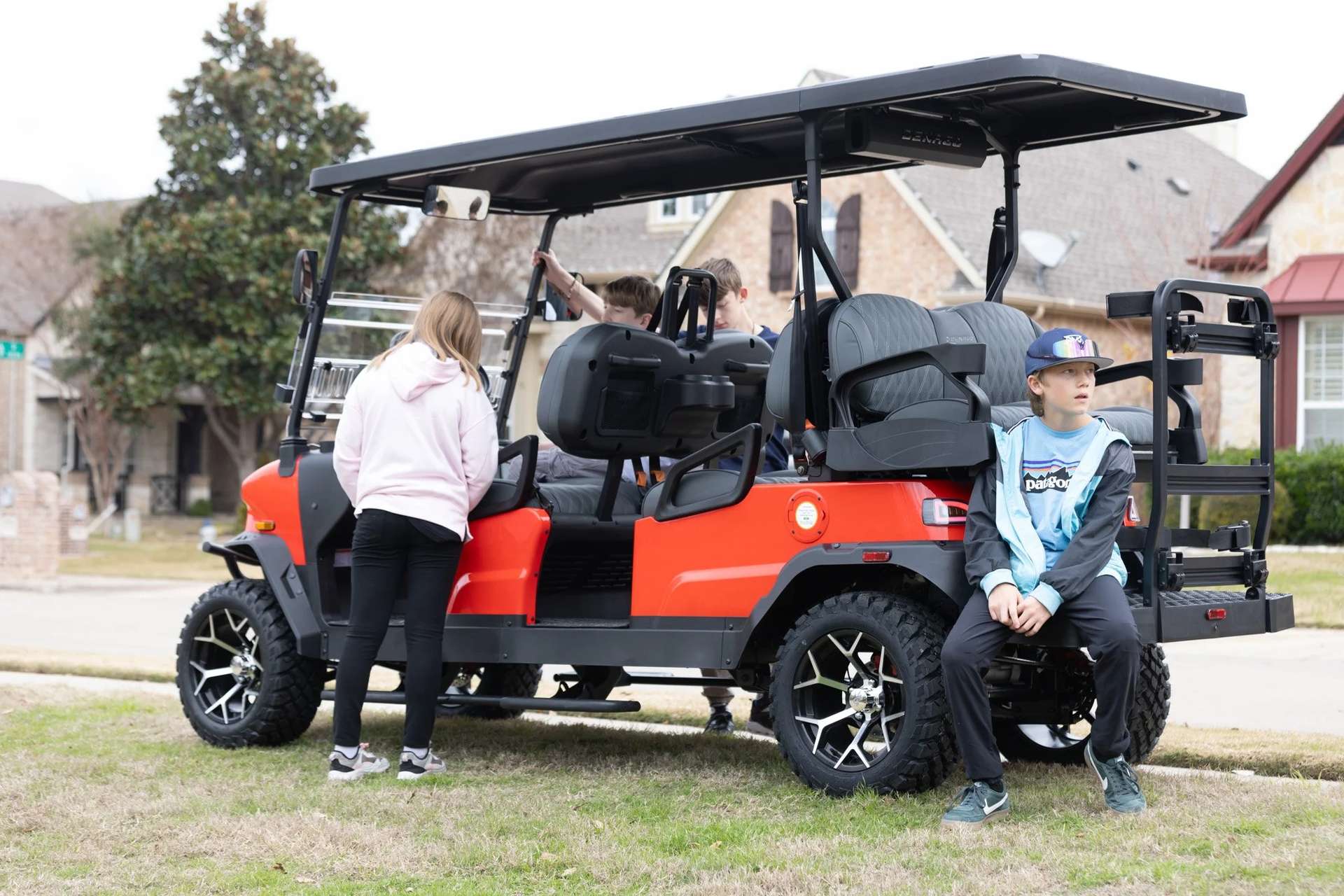
Family-friendly features make NEVs ideal for community transportation
Technology Integration and User Experience
Today’s leading NEVs incorporate technology that rivals conventional vehicles. Touchscreen interfaces with Apple CarPlay and Android Auto integration have become standard expectations. These systems provide navigation assistance within communities, entertainment during longer rides, and connectivity features that modern families expect.
Climate control capabilities matter significantly in Canadian conditions. Whether dealing with humid summers or cold winters, proper heating and ventilation systems ensure year-round comfort. Some advanced models now include NFC key card systems, eliminating traditional key management concerns.
Range and Performance Considerations
Realistic range expectations are crucial for community use. Quality NEVs should provide 40-60 miles of range under normal conditions, accounting for Canadian weather variations that can impact battery performance. The EPA notes that cold weather can reduce electric vehicle range by up to 40%, making robust battery systems essential for year-round Canadian use.
Consider your community’s geography when evaluating performance needs. Hilly terrain requires more robust motor systems, while flat communities can prioritize efficiency over power.
Canadian-Specific Considerations
**Local Assembly and Support**: Canadian assembly operations provide several advantages including reduced shipping costs, faster parts availability, and support for local manufacturing jobs. Companies establishing Canadian assembly facilities demonstrate long-term commitment to the market.
**Dealer Network and Service**: Reliable local service becomes crucial for electric vehicles. Evaluate manufacturer dealer networks in your province and confirm availability of certified technicians for maintenance and repairs.
**Weather Resilience**: Canadian NEVs must handle temperature extremes from -30°C winters to +35°C summers. Look for vehicles tested in Canadian conditions with appropriate cold weather packages and thermal management systems.
Making the Right Choice for Your Community

Modern NEVs combine comfort with environmental responsibility
The ideal NEV balances performance, reliability, and value while meeting your specific community transportation needs. Premium models like the Denago Rover XL and Rover XL 6 exemplify the modern NEV approach, combining LiFePO4 battery technology, aluminum construction, and comprehensive safety features with contemporary technology integration.
**Seating Configuration**: Consider your typical passenger load. Four-seat models suit couples and small families, while 6-seat configurations accommodate larger groups. The 2+2 lifted configuration popular in models like the Nomad XL provides versatility for both passenger and cargo transport.
**Customization Options**: Many manufacturers offer customization packages including upgraded seating, enhanced lighting, storage solutions, and performance modifications. Evaluate which options align with your intended use patterns.
**Total Cost of Ownership**: While initial purchase price matters, consider long-term costs including maintenance, battery replacement (if needed), and energy consumption. Quality lithium battery systems often justify higher upfront costs through extended lifespan and reduced maintenance requirements.
Future-Proofing Your Investment
The electric vehicle landscape continues evolving rapidly. Choose manufacturers demonstrating innovation commitments through regular technology updates, expanding dealer networks, and responsive customer support. Companies investing in Canadian operations show market confidence that benefits long-term ownership.
Safety organizations like the Insurance Institute for Highway Safety continue developing standards for emerging vehicle categories, and choosing NEVs from manufacturers committed to safety excellence positions you well for future regulatory developments.
Remember that NEVs represent an investment in sustainable community transportation. Quality models provide years of reliable, environmentally responsible mobility while supporting the transition to cleaner community transportation solutions.
Final Recommendations
When selecting your neighborhood electric vehicle, prioritize manufacturers offering comprehensive warranties, established Canadian dealer networks, and proven track records in cold climate operations. Compare multiple configurations to determine which seating layout and feature set best matches your community transportation needs.
The transition to electric community transportation represents both an environmental commitment and a practical solution for modern neighborhood mobility. Choose wisely, and your NEV investment will provide years of reliable, enjoyable transportation while contributing to cleaner Canadian communities.
