

The Neighborhood Transportation Revolution
Canadian neighborhoods are experiencing a quiet transportation revolution. From exclusive golf communities in British Columbia to gated developments in Ontario, electric carts are evolving beyond their traditional golf course origins to become integral components of modern community design and daily life. This transformation reflects broader changes in how Canadians approach local transportation, environmental responsibility, and community interaction.
The evolution from basic golf carts to sophisticated neighborhood electric vehicles (NEVs) represents more than technological advancement—it demonstrates a fundamental shift in community planning philosophy that prioritizes sustainability, safety, and enhanced quality of life for residents across all age demographics.
From Golf Course to Community Streets
Traditional golf carts served a single, specific purpose: transporting players and equipment around golf courses. Today’s neighborhood electric vehicles serve multiple functions within residential communities, from daily transportation and utility tasks to recreational family outings and community event transport.
Research conducted by the Green Car Journal on NEV adoption in planned communities shows that residents choose electric vehicles over conventional cars for short trips 89% of the time when both options are available. This preference demonstrates the practical appeal of electric transportation for community-scale mobility.
**Multi-Functional Community Integration**: Modern electric carts accommodate diverse community needs through versatile seating configurations, cargo capacity, and weather protection. The Denago Rover XL series exemplifies this evolution, offering 4-seat and 6-seat configurations that serve everything from family transportation to community maintenance duties.
**Infrastructure Adaptation**: Canadian communities are adapting their infrastructure to accommodate electric cart usage through dedicated charging stations, cart-friendly pathway systems, and storage facilities integrated into community planning. This infrastructure investment signals long-term commitment to electric transportation solutions.

Electric vehicles serve diverse community functions beyond recreation
Environmental Impact on Community Planning
The environmental benefits of electric cart adoption extend beyond individual vehicle choices to influence community-wide planning decisions and environmental goals. Canadian communities increasingly recognize that sustainable transportation starts with local mobility solutions.
**Air Quality Improvements**: Electric carts produce zero direct emissions, contributing to improved air quality within residential areas. This benefit becomes particularly significant in enclosed or semi-enclosed community spaces where conventional vehicle emissions would accumulate and impact resident health.
The EPA’s analysis of electric vehicle environmental benefits demonstrates that electric vehicles typically generate lower lifetime carbon emissions than gasoline alternatives, even accounting for electricity generation. In Canadian provinces with clean electricity grids, these benefits are amplified significantly.
**Noise Pollution Reduction**: Electric cart operations generate minimal noise compared to gasoline-powered alternatives, contributing to the peaceful environment that defines desirable residential communities. This quiet operation allows for early morning and late evening use without disturbing neighbors.
Community Sustainability Goals
Forward-thinking Canadian communities are integrating electric cart adoption into broader sustainability initiatives. These vehicles support community-wide environmental goals while providing practical transportation solutions that enhance resident quality of life.
**Carbon Footprint Reduction**: Community-wide electric cart adoption can significantly reduce transportation-related carbon emissions for short-distance trips, which comprise the majority of vehicle miles traveled in residential areas.
**Renewable Energy Integration**: Communities installing solar charging stations for electric carts create visible demonstrations of renewable energy commitment while providing practical charging solutions that reduce grid dependence.
Safety Evolution and Community Standards
The safety profile of modern electric carts has improved dramatically, enabling their integration into family-oriented communities where children and elderly residents interact regularly with vehicle traffic.
**Advanced Safety Features**: Contemporary models include four-wheel hydraulic disc brakes, comprehensive LED lighting, backup cameras, and proper seat belt systems. These features address safety concerns that previously limited electric cart adoption in residential settings.
According to safety research organizations like the Insurance Institute for Highway Safety, ongoing development of safety standards for emerging vehicle categories helps ensure appropriate protection for community transportation applications.
**Regulatory Framework**: Transport Canada’s Low-Speed Vehicle regulations provide clear guidelines for safe operation while allowing communities flexibility in implementing appropriate transportation solutions for their specific environments.
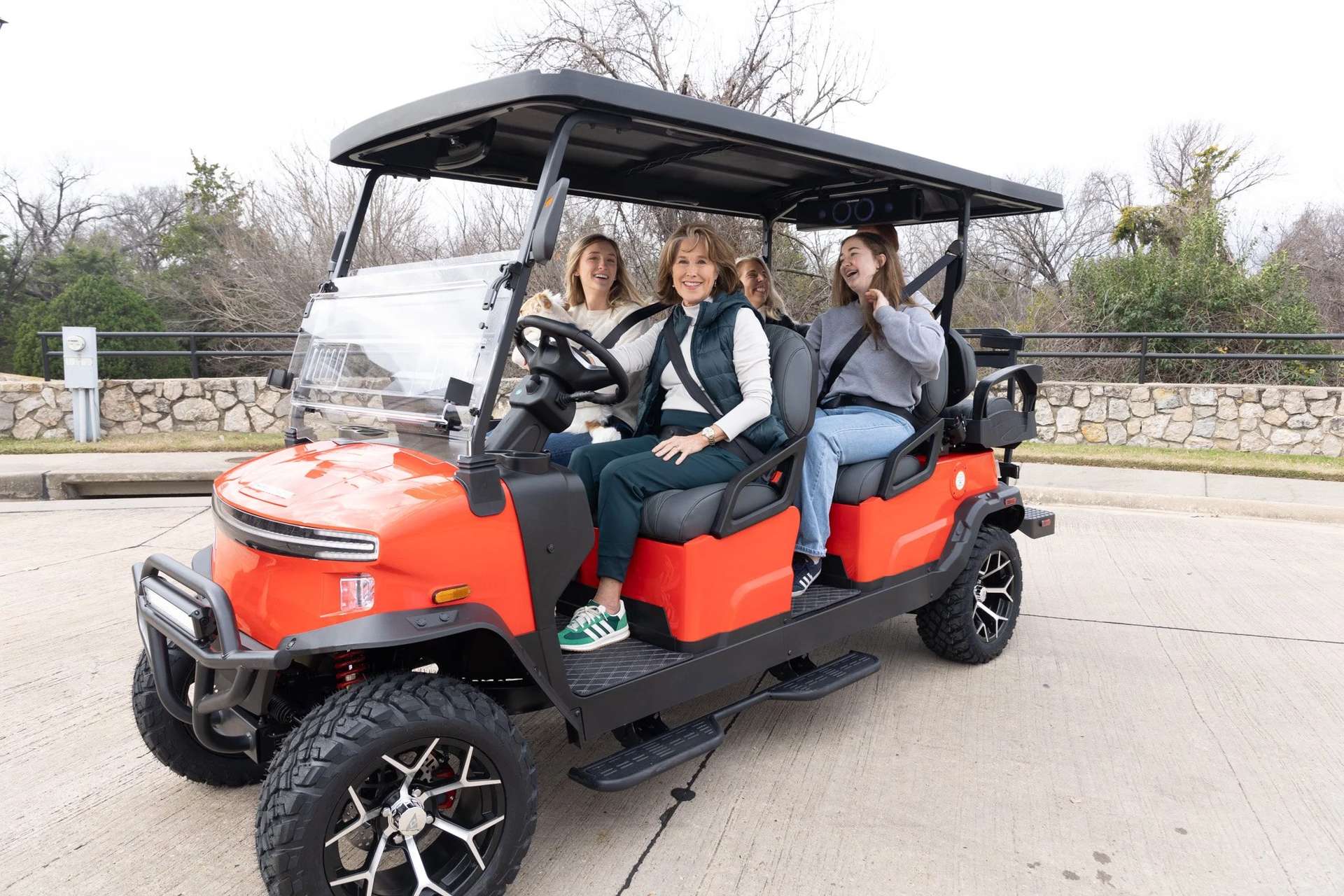
Modern safety features enable family-friendly electric cart use
Community Interaction and Social Benefits
Electric carts facilitate increased community interaction by making short-distance travel more appealing and accessible for residents who might otherwise drive conventional vehicles or remain isolated within their homes.
**Enhanced Mobility for All Ages**: Electric carts provide transportation options for residents who may no longer feel comfortable driving conventional vehicles but want to maintain independence and community engagement. This includes both elderly residents and younger family members not yet licensed for conventional vehicle operation.
**Social Connectivity**: The open design and slower speeds of electric carts encourage casual interaction between neighbors, contributing to the sense of community that defines successful residential developments.
Economic Impact on Property Values and Community Appeal
Communities embracing electric cart infrastructure often experience positive impacts on property values and overall marketability as environmentally conscious buyers increasingly prioritize sustainable living options.
**Premium Community Positioning**: Electric cart infrastructure signals community commitment to environmental stewardship and modern amenities, positioning developments as forward-thinking and desirable for environmentally conscious buyers.
**Operational Efficiency**: Communities using electric carts for maintenance, security, and administrative functions report significant operational savings compared to conventional vehicle alternatives, freeing resources for other community improvements.
The Ontario LSV pilot program demonstrates regulatory evolution that supports appropriate electric cart integration in Canadian communities, providing frameworks for responsible adoption while maintaining safety standards.
Technology Integration and Smart Community Features
Modern electric carts incorporate technology that integrates with smart community infrastructure, including charging station networks, security systems, and community management platforms.
**Smart Charging Infrastructure**: Advanced charging systems provide community-wide energy management, renewable energy integration, and usage tracking that supports both individual convenience and community sustainability goals.
**Community Fleet Management**: Some communities implement shared electric cart programs that provide resident access to vehicles for specific purposes while optimizing utilization and reducing individual ownership requirements.
Challenges and Considerations
Despite significant benefits, electric cart integration into Canadian communities requires careful planning and consideration of specific challenges related to climate, regulations, and community dynamics.
**Winter Operation**: Canadian communities must address cold-weather performance through appropriate vehicle selection, charging infrastructure heating, and seasonal operation procedures that maintain safety and reliability.
**Insurance and Liability**: Communities adopting electric cart infrastructure should verify insurance coverage, liability considerations, and risk management procedures appropriate for their specific circumstances and provincial regulations.
**Maintenance and Service**: Establishing reliable service and maintenance support becomes crucial for communities investing in electric cart infrastructure, particularly in regions with limited dealer networks.
Future Outlook for Community Electric Transportation
The transformation of Canadian neighborhoods through electric cart adoption appears to be in its early stages, with technological improvements, expanding infrastructure, and growing environmental awareness creating conditions for continued growth.
**Autonomous Vehicle Integration**: As autonomous vehicle technology develops, community-scale electric transportation may provide testing grounds for advanced navigation and safety features that eventually transition to broader automotive applications.
**Grid Integration and Energy Storage**: Advanced electric cart systems may eventually provide distributed energy storage capabilities that support community electrical grids during peak demand periods or power outages.
The evolution from golf course to gated community represents just the beginning of electric cart integration into Canadian neighborhood planning. As technology continues improving and environmental priorities gain importance, these vehicles are positioned to become standard features of well-designed sustainable communities across Canada.
Communities that embrace electric transportation today position themselves as leaders in sustainable development while providing residents with enhanced mobility options that improve quality of life and environmental stewardship for generations to come.
