
Understanding the Community EV Revolution in Canada
A new wave of lithium-powered electric vehicles — bigger and more capable than traditional golf carts — is showing up in Canadian gated communities, retirement villages, cottage developments, and resort campuses. They’re not street-legal in most places, but for the environments they’re built for, they genuinely make life better and save money.
Why Is This Happening Now?
Three things converged:
1. Lithium iron phosphate (LiFePO4) batteries reached a price/performance sweet spot. Five years ago, a lithium cart was $15K+ and felt like a gamble. Now you can get a well-specced 4-seater for under $10K USD. The batteries last 3,000-5,000 cycles (vs. 500-800 for lead-acid), weigh less, charge faster, and don’t need monthly maintenance. For a Canadian buyer, the no-maintenance angle is huge — nobody wants to be watering battery cells in February.
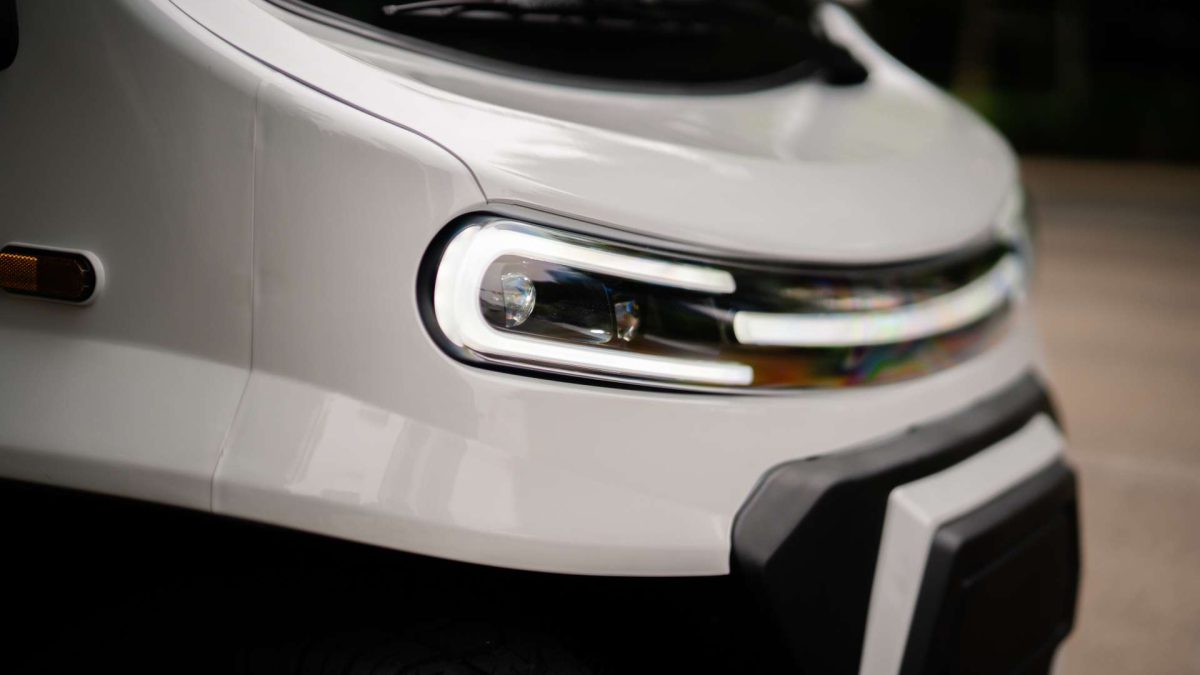
2. Manufacturers noticed the Canadian market. Denago EV, originally a Florida-based company, launched a full Canadian operation with local assembly and a dealer network in Ontario. They even developed a model called the City — a 5-passenger enclosed EV with a 13-inch display, NFC start, and up to 80 miles of range — that exists only in their Canadian lineup. That’s not something you do unless you see serious demand here.
3. Community infrastructure caught up. More gated communities and retirement villages are installing standard 110V outlets in parking areas, some are adding Level 2 chargers. Cottage associations are updating their bylaws to allow electric LSVs while banning gas-powered UTVs — noise complaints are a real driver of this change.
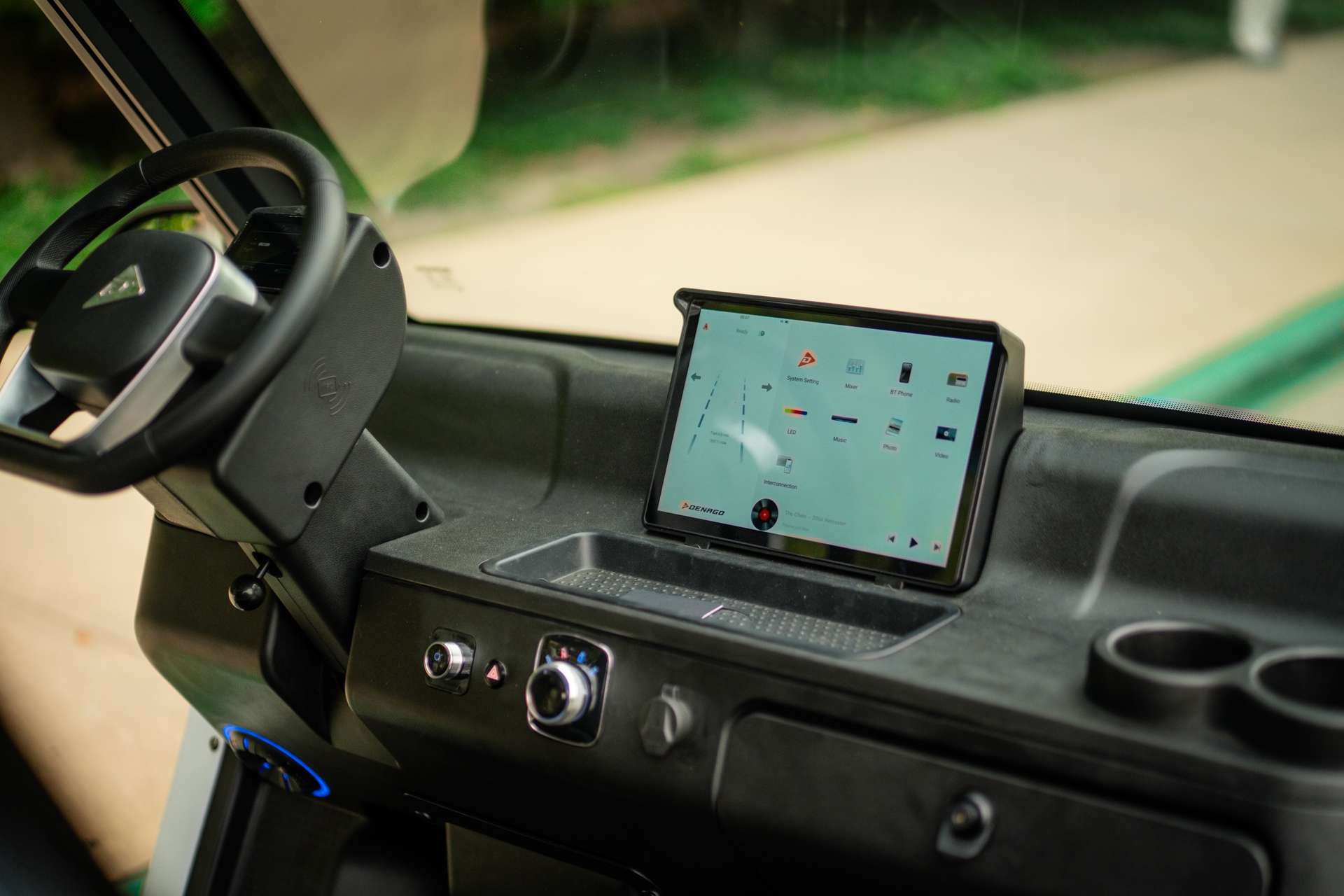
The Denago City — a Canada-exclusive enclosed EV with 13-inch display and NFC keycard.
What’s Available in Canada?
Here’s the current Denago lineup available in Canada, representative of the broader community EV market:
| Model | Seats | Type | Key Feature | Approx. Price (USD MSRP) |
|---|---|---|---|---|
| Nomad | 4 | Standard | Entry-level lithium cart | ~$7,500 |
| Nomad XL | 2+2 | Lifted | Great all-rounder | ~$8,495 |
| Rover XL | 4 forward | Lifted | Most popular family model | ~$9,995 |
| Rover XL 6 | 4+2 | Lifted | 6-person capacity | ~$11,995 |
| City | 5 | Enclosed | Enclosed urban/campus EV (Canada only) | TBD |
All models use LiFePO4 batteries (5-year warranty), aluminum frames, 4-wheel hydraulic brakes, and 10-inch+ touchscreens with CarPlay/Android Auto.
The Canadian Regulation Explainer
This is where most people get confused, so let’s keep it clear:
Federal Level (Transport Canada)
- These vehicles are classified as Low Speed Vehicles (LSVs)
- Definition: electric, 4 wheels, max 40 km/h, under 1,361 kg
- Transport Canada explicitly says they do not encourage LSV use on public roads
- They only need to meet 3 safety standards (vs. ~40 for a passenger car)
- They’re designed for controlled-access environments
Provincial Level (Varies)
- Ontario has a Low-Speed Vehicle Pilot Program. Municipalities can pass bylaws to allow LSVs on roads with speed limits of 50 km/h or under. Several towns have opted in (Lambton Shores, parts of Halton, etc.)
- BC, Alberta, Quebec — rules vary, generally more restrictive. Check your province.
- Most provinces default to: LSVs are fine on private property, gated communities, resort grounds, and off-road paths
Practical translation: If you live in a gated community, retirement village, cottage development, resort, or golf course community — you’re almost certainly fine. If you want to cross a public road or ride on a town street, check your municipal bylaws first.

Lifted models like the Rover XL handle gravel paths and off-road trails with ease.
The Financial Case: EV Cart vs. Gas UTV
We ran the numbers for a cottage association with 45 units:
Gas UTV (Typical Used Polaris Ranger)
- Purchase: $12,000-18,000
- Gas: ~$500/year
- Maintenance: ~$400/year (oil, belts, filters)
- Expected life: 8-10 years
Lithium EV Cart (e.g., Denago Rover XL)
- Purchase: ~$10,000-12,000 CAD (dealer dependent)
- Electricity: ~$60-100/year
- Maintenance: ~$50-100/year (tires, brake pads — basically nothing else)
- Battery replacement: Not expected within warranty (5 years), pack should last 10+ years
- Expected life: 12-15 years (no engine/transmission wear)
Over 10 years, the EV cart saves roughly $6,000-$10,000 compared to a gas UTV, depending on usage. And that’s before you factor in the noise reduction, which was the actual reason most community members started looking.
Who This Makes the Most Sense For
✅ Retirement / 55+ communities — Quiet, easy to drive, safe (hydraulic brakes, LED lights, backup camera), smooth ride for mobility-sensitive passengers
✅ Cottage country — Perfect for trips to the dock, neighbouring cottages, the camp store. LiFePO4 handles cold storage well
✅ Resort and campground operators — Professional appearance, low maintenance fleet, guests love the tech features
✅ Golf course communities — The natural home for these vehicles
✅ Farms and large properties — Off-road capable lifted models work great on gravel and dirt paths
❌ City commuting — Not yet. Even in Ontario’s pilot program, LSVs can only do 40 km/h max on roads with 50 km/h speed limits
❌ Anyone expecting highway access — Never going to happen with this vehicle class
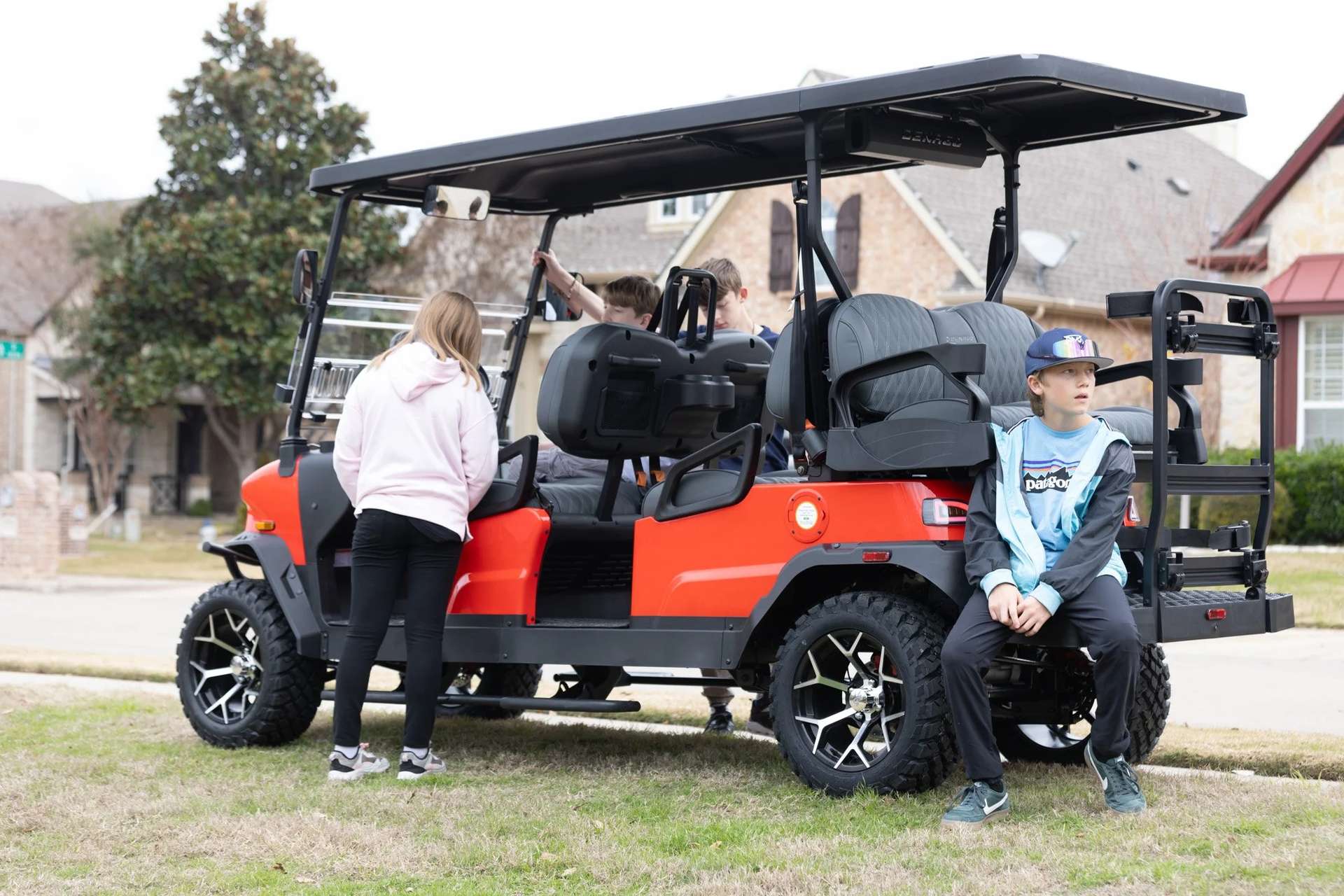
Families are discovering EV carts as the perfect ride for cottage weekends and community life.
The Market Is at an Inflection Point
The Canadian market for community EVs is genuinely shifting. Five years ago, this was a rich-person novelty. Now the technology (LiFePO4 batteries, smart electronics) is mature enough and the pricing competitive enough that it makes real financial sense for a lot of people.
The biggest barrier is still regulation awareness — too many people assume “golf cart = illegal everywhere” or “electric = wimpy.” Neither is true anymore. And the fact that manufacturers are developing Canada-specific products (like Denago’s City model) tells you the market is being taken seriously.
If you’re in any of the environments described above, we’d strongly recommend test-driving one before dismissing the category. The experience has genuinely changed since the old lead-acid Club Car days.
