
Why We Switched from a Gas UTV to a Lithium EV Cart in Our Gated Community
Figured I’d share this since the question comes up a lot in community Facebook groups and nobody ever posts a proper follow-up.
Our Community Setup
We live in a 55+ gated community about an hour outside the GTA. Around 400 homes, a small clubhouse, a 9-hole par-3 course, and a strip of shops you can reach without leaving the gate. Pretty standard setup. For years the default ride was either a beat-up Club Car or a side-by-side UTV. Both have their issues — the old lead-acid carts die after two summers of Canadian winters, and the UTVs are loud, expensive on gas, and honestly overkill for a trip to the mailbox.
Last spring we bit the bullet and picked up a Denago Rover XL from a dealer in Ontario. For those who haven’t seen them, Denago is an American brand (based in Florida) that recently launched a dedicated Canadian operation — they assemble locally and have a Canadian service network. Their lineup here actually includes a model called the City that doesn’t even exist on the US site, which tells you they’re serious about this market.
Why the Rover XL Specifically?
- 4 forward-facing seats — no rear bench facing backwards, which my wife hated on our old cart
- LiFePO4 battery — the same chemistry used in Tesla Powerwalls. No maintenance, no watering cells, no acid smell in the garage
- 10-inch touchscreen with Apple CarPlay — yeah, it’s a golf cart with CarPlay. My teenage son thinks this is the greatest thing since the PS5
- 4-wheel hydraulic disc brakes — feels way more substantial than drum brakes when you’re going down the hill by the lake
- Full aluminum frame — so rust shouldn’t be an issue with our salt-heavy winters
- 5-year battery warranty — real peace of mind for a lithium investment

The Denago Rover lineup is built for Canadian community life.
The Canadian Regulation Reality
This is the part nobody talks about enough. In Canada, these are classified as Low Speed Vehicles (LSVs) — max 40 km/h, electric only, under 1,361 kg. Transport Canada does NOT encourage them on public roads. They’re designed for:
- Gated and planned communities (exactly our use case)
- Resort and campground roads
- Private club grounds
- Off-road recreational paths
Ontario has a pilot program where some municipalities have passed bylaws letting LSVs on roads with speed limits of 50 km/h or under, but that’s still a patchwork — your town might allow it, your neighbour’s town might not. So before you buy, check your local bylaws. For most of us in gated communities, cottages, or resorts, this isn’t even an issue since you’re on private roads anyway.
What Actually Changed After 6 Months
1. Cost per km dropped to basically nothing. We went from spending $40-50/month on gas for the UTV to maybe $8/month in electricity. The LiFePO4 charges from a standard 110V outlet overnight. We do about 30-40 km per week and charge every 3-4 days.
2. It’s silent. This sounds like a small thing until you realize how much nicer your Saturday morning is when your neighbour isn’t firing up a Polaris Ranger at 7 AM. Several people on our street have switched since they saw (and more importantly, didn’t hear) ours go by.
3. The kids actually want to come with us. Between the CarPlay for their music and the smooth ride, our 14-year-old voluntarily joins us for grocery runs. If you’re a parent, you understand how significant this is.
4. Winter storage was easier than expected. LiFePO4 handles cold way better than lead-acid. We stored it in the garage (unheated but above -10°C most of the winter), and the battery management system kept it healthy. Full charge held over two months of sitting.
5. Resale interest is already there. A buddy in our community bought a different brand last year and already regrets not going with lithium. He’s been eyeing ours pretty hard.

The Denago City model — a Canada-exclusive enclosed EV designed for communities and resorts.
What I’d Improve
- The windshield fogs up on cooler mornings. I added a small 12V defroster fan — solved it for $30.
- I wish the cargo area behind the rear seats was a bit deeper. If you’re hauling a lot of groceries you’ll want a small cargo box attachment.
- More Canadian dealers would help. There are a handful in Ontario right now. If you’re in BC or the Maritimes, the buying experience might be trickier for now.
The City Model — Worth Watching
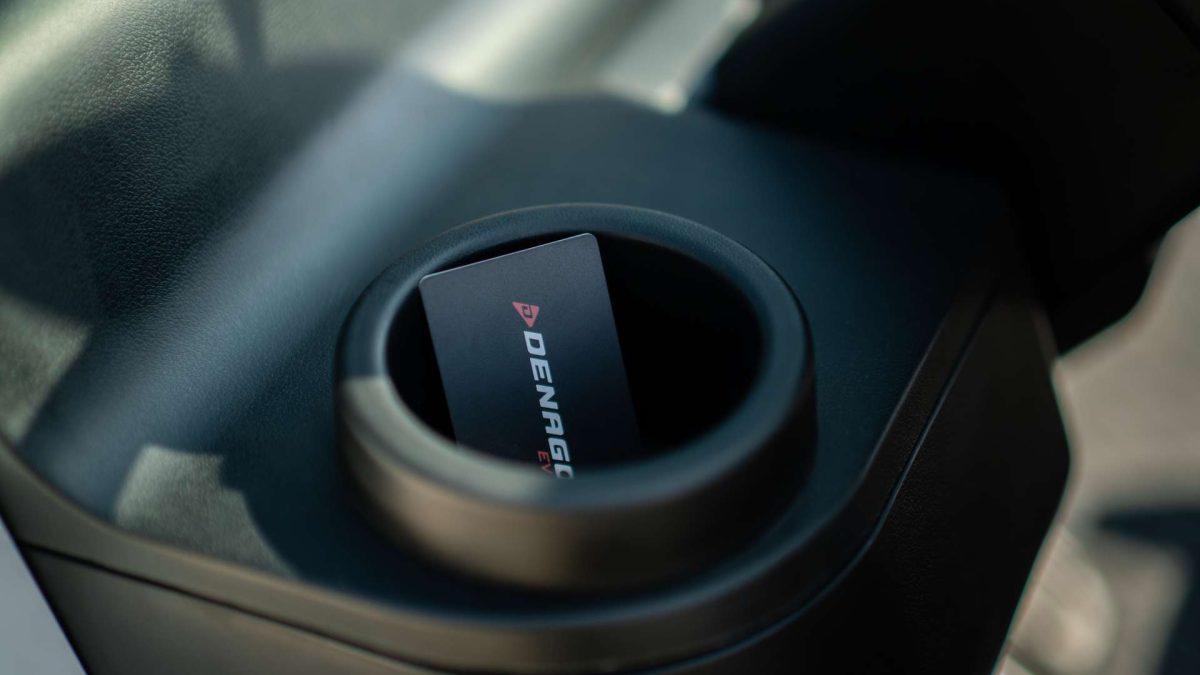
I got to see the Denago City at the dealer. It’s a 5-seater enclosed EV that looks more like a tiny car than a golf cart. 13-inch digital display, NFC keycard start, see-through roof, lounge-style seating. The specs list 80 miles range and up to 25 mph. It’s clearly aimed at larger communities, resorts, and maybe even campus shuttle use. The US lineup doesn’t have this one at all — it’s a Canada-specific product, which is interesting. If you need something more enclosed for shoulder-season use, keep an eye on it.
Bottom Line
For anyone in a gated community, cottage development, or resort environment in Canada — this category of vehicle makes a lot of sense. Just do your homework on local regulations. The tech has caught up to the point where you’re not compromising on comfort or reliability anymore, and the lithium battery longevity means you’re not replacing packs every 3-4 years like the old days.
